In January, someone forwarded me a screenshot.
Moreover, it was the fourth one that week for faceless channel monetization.
Additionally, a Reddit comment, heavily upvoted, claimed faceless channel monetization was finished.
It warned that YouTube had started mass-banning AI channels and that building one was wasteful.
Underneath it, dozens of replies agreed.
Then a wave of videos followed, with thumbnails like ‘FACELESS IS DEAD ☠️’.
It also used a visible surge of red arrows.
While researching this exact format, I did the boring thing.
Additionally, I read what YouTube had published.
Then I tracked down the reporting on what happened in January.
Later, I noted the clarification YouTube issued in July.
The gap between the panic and the policy was enormous.
Moreover, observers noted the distance clearly.
In 2026, faceless channel monetization remains possible. However, rules became more specific three weeks ago. This update hurts honest creators in one key area. Additionally, I will explain that part most articles skip.
HOW I RESEARCHED THIS: I don’t run a large faceless channel monetization operation. I won’t pretend I do. Additionally, I read YouTube’s published Partner Program policies. Next, I watched the Creator Insider video where YouTube’s trust and safety lead explained the changes. Also, I reviewed reporting on the January enforcement wave from TechCrunch, The Next Web, and The Hollywood Reporter. Everything below is sourced to those, not to forum threads. If something is disputed or unclear, I’ve said so.
What actually happened with faceless channel monetization (the four-step version)
Almost all the confusion comes from people mashing four separate events into one story.
July 2025 — the rename. YouTube renamed its “repetitious content” monetization rule to “inauthentic content.” That’s it. YouTube’s own line at the time was that this kind of content was never eligible for monetization anyway, and the update just made the wording clearer. No new ban. A relabeled folder.
January 2026 — the purge. YouTube terminated 16 channels with a combined 35 million subscribers and roughly 4.7 billion lifetime views, with press estimates putting their combined ad revenue near $10 million a year. This is the event that produced the screenshots. These were operations pumping out mass-generated video at industrial scale — not people making four thoughtful videos a month.
June 2026 — the algorithm shift. The Hollywood Reporter reported in mid-June that YouTube’s recommendation system had started favoring videos with a real human face on camera. This is separate from monetization policy and it’s the part that genuinely disadvantages faceless creators. More on it below.
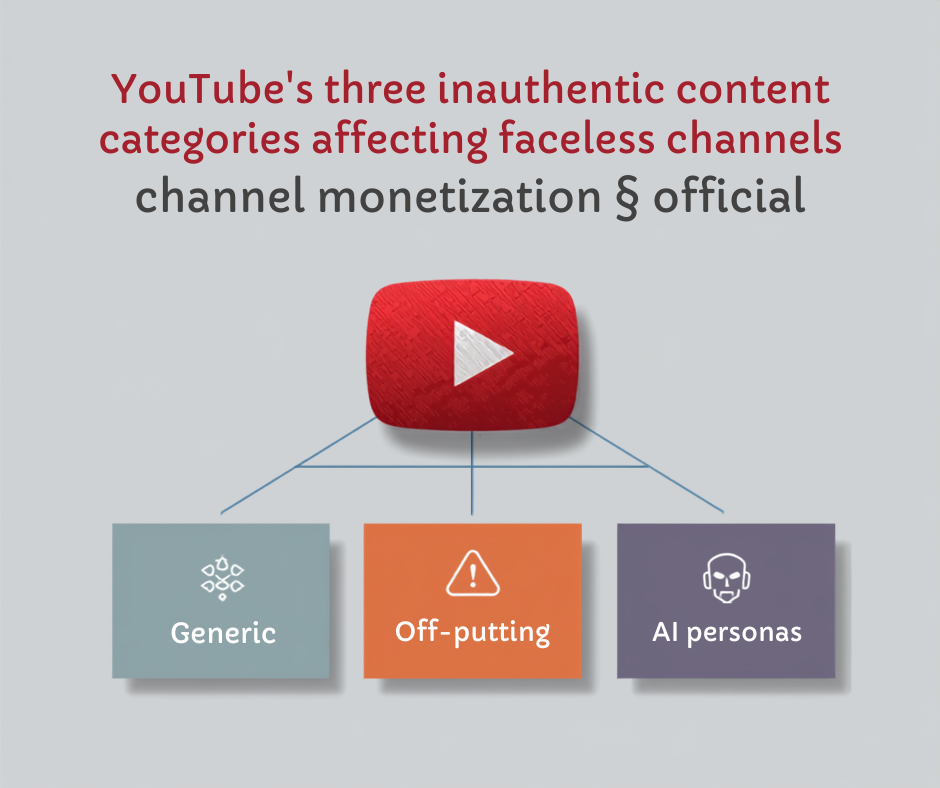
July 16, 2026 — the clarification. YouTube’s VP of trust and safety, Matt Halprin, appeared on Creator Insider and split “inauthentic content” into three categories. Moreover, TechCrunch and others confirmed it’s a clarification of existing rules rather than a new policy. This is the most useful thing YouTube has published on the subject, and almost nobody has read it.
Additionally, visit [https://www.youtube.com/creators/earn/youtube-partner-program/].
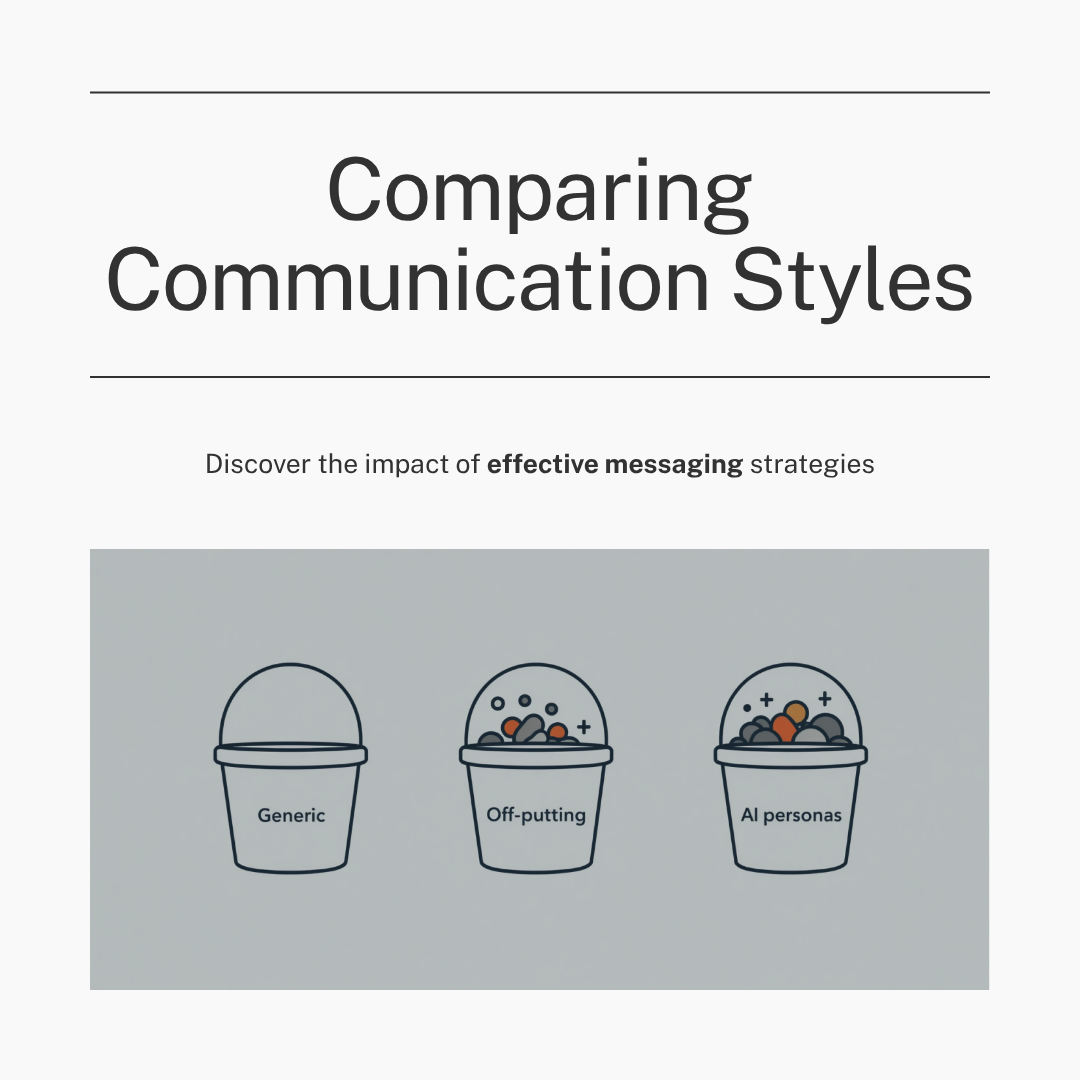
The three buckets, in plain English
Therefore, this is the part worth memorizing, because it’s now the actual test.
Generic, repetitive, or template-based content
This content-farm problem persists.
Additionally, videos are built from the same template with only the nouns swapped.
If a viewer watched five of your uploads in a row and they felt interchangeable, that’s the bucket.
The clearest test I’ve seen is this: could another person recreate your video in an afternoon by changing the topic? If yes, you’re in the risk zone for faceless channel monetization.
Worth noting: publishing frequently is not a violation.
Moreover, uploading daily is fine.
That is, the problem occurs when quantity replaces variation.
2. Off-putting or distressing content
Emotionally manipulative formulas offer no real payoff. However, they rely on shock value to attract clicks. For example, YouTube publicly cited videos showing an animal in distress, followed by a dramatic ‘rescue’ moments later.
However, this bucket surprised most people, because it isn’t about AI at all. Plenty of human-made channels sit squarely in it, enabling faceless channel monetization.
3. AI personas presenting as real
Content using AI-generated personas to deliver information as if a real, credible person were speaking particularly around sensitive subjects like news, health and finance. A synthetic narrator reading your own script is not this. A fabricated “doctor” giving health advice is.
What the policy does not say
Here’s where the panic invented rules that don’t exist.
“AI voice-over means automatic demonetization.” False. A synthetic voice reading an original script violates nothing. Enormous numbers of monetized channels use exactly this.
“One AI video demonetizes your whole channel.” This inverts how enforcement works. Reviews look at the channel as a whole its main theme, its most-viewed videos, its newest uploads, its metadata not isolated videos.
“Disclosing AI content kills your reach.” YouTube has stated the altered-content disclosure doesn’t affect ranking. And the disclosure only applies to realistic synthetic content AI-generated scenes that could be mistaken for real footage, or making it appear someone said something they didn’t. A TTS narrator over stock clips generally doesn’t trigger it.
“Faceless is banned.” Faceless is a format, not a violation. What got terminated in January was mass production, and mass production would have been ineligible whether a human or a machine made it.
The honest part nobody wants to write
Two things genuinely work against faceless creators right now, and pretending otherwise would be dishonest.
Enforcement at this scale runs on automated systems, and it produces false positives. Reporting on the crackdown documents creators with years of original voice-over work getting caught in monetization reviews because their format resembles the automated channels the policy targets. Being innocent doesn’t mean being untouched.
The recommendation shift toward faces is real. Craig Billings, who runs the 1.7 million subscriber channel Doctor NOS, told The Hollywood Reporter about this directly in June. If YouTube’s system rewards on-camera presence, a faceless channel is running slightly uphill even when fully compliant.
Neither of these makes the format unviable. Both mean you need a bigger margin of originality than you did two years ago.
🔗Full script to video guide [https://aiflohub.com/the-complete-ai-content-stack-for-2026-from-script-to-published-video-in-under-30-minutes/]
How to audit your own channel against the buckets
Do this in about an hour. It’s the most useful thing you can do with this information.
Step 1 — Watch five of your own uploads back to back. Not skim. Watch. If they blur together, so do they for a reviewer. This single test catches most bucket-one problems.
Step 2 — Apply the afternoon test to your last video. Could someone rebuild it in one afternoon by swapping the topic? Write down honestly what in it couldn’t be swapped. If that list is empty, that’s your problem and your fix.
Step 3 — Check your intros. Template intros are the fastest way to make ten different videos feel like one. Vary the opening structure, not just the words.
Step 4 — Look at your thumbnails as a grid. Open your channel page. If your thumbnails are the same layout with different text, you look mass-produced whether or not you are.
Step 5 — Find your point of view. This is the real differentiator. Anywhere your video says something a template couldn’t an opinion, a comparison you actually ran, a correction of a common claim that’s what puts you outside bucket one. If you can’t find any, add some.
Step 6 — Check your disclosure settings. In YouTube Studio, the altered-or-synthetic-content toggle appears at upload. Use it if you have realistic AI-generated visuals or altered footage. It costs you nothing and YouTube says it doesn’t affect ranking.
Step 7 — Check your monetization status directly. YouTube Studio shows your channel’s monetization status and any policy issues, including the reason for any action. If something has been applied, you can appeal there. Don’t diagnose your channel from a forum thread when Studio tells you plainly.
Mistakes that put channels in the risk zone
Publishing daily because someone said volume wins. Volume isn’t the violation, but daily uploads with no variation is exactly the pattern automated review looks for. Three good videos a week beats seven identical ones.
Reading source material verbatim. Scripts read word-for-word from news articles or Wikipedia fail on both inauthentic and reused content grounds. Rewrite, restructure, add your read on it.
Slideshows with no narrative. Static images plus TTS with no editing decisions is the single most commonly cited example of bucket one across every write-up of this policy.
Running ten channels off one template. This is precisely the shape the January enforcement targeted. Whatever the “cash cow multi-channel” videos told you in 2023, it’s the highest-risk model on the platform now.
Not disclosing realistic AI visuals. The disclosure is free. Skipping it can bring penalties on top of whatever else is going on with your channel.
Assuming your niche is safe. Health, finance and news carry extra weight under bucket three because the persona question matters more there. Being right isn’t enough in those niches being clearly not a fake authority matters too.
So what does a viable faceless channel look like now?
Roughly this: fewer uploads, more variation between them, a script with an actual position in it, real editing decisions instead of a fixed template, and the disclosure toggle used when it applies.
For anyone starting from zero, the monetization thresholds haven’t moved 1,000 subscribers plus 4,000 valid public watch hours in 12 months, or 10 million valid Shorts views in 90 days, along with meeting the Partner Program policies. The bar to enter is the same. The bar to stay is what tightened.
And the practical work of staying compliant turns out to be identical to the work of making the channel good. Original research. A perspective a template couldn’t produce. Formats that change between uploads. There’s no compliance trick separate from that, which is either annoying or reassuring depending on how you were planning to build.
If you were hoping to spin up eight templated channels and let them run, that era is genuinely over, and the January terminations were the proof. If you were planning to make a small number of genuinely useful videos without showing your face that still works, and the people telling you otherwise mostly haven’t read the policy they’re describing.
Read the actual buckets. Audit your own channel against them honestly. That’s the whole job.
🔗 Best AI Voice tools for Channel [https://aiflohub.com/elevenlabs-vs-murf-ai-which-ai-voice-actually-fits-faceless-youtube-in-2026/] .
FAQ
Are faceless YouTube channels still monetized in 2026?
Yes. Faceless is a format, not a policy violation, and channels using synthetic narration over original scripts remain eligible for the Partner Program. What loses monetization is mass-produced, templated, or off-putting content, along with AI personas presenting as real people on sensitive topics.
Does using AI voice-over get you demonetized?
No. There is no rule that demonetizes content for using AI tools. YouTube’s trust and safety lead explicitly framed the July 2026 update as targeting content farming rather than generative AI itself.
Do I have to disclose AI in my YouTube videos?
Only for realistic synthetic or altered content — AI-generated footage that could pass as real, or making it appear a real person said or did something they didn’t. A synthetic narrator reading your script over stock footage generally doesn’t require it. When in doubt, toggle it; YouTube says disclosure doesn’t affect ranking.
Why did YouTube terminate those big AI channels in January 2026?
For mass-produced content under the inauthentic content policy — not for the presence of AI tools. The 16 channels removed had a combined 35 million subscribers and were producing generated video at scale.
Can I appeal a demonetization?
Yes. YouTube Studio shows the reason for any action against your channel and provides an appeal route. Check your monetization status there rather than diagnosing the problem from forum posts.
Leave a Reply