Last week I had four browser tabs open, a spreadsheet full of vendor quotes, and a half-written email I’d been avoiding for two days. Instead of doing it myself, I decided to hand the whole mess to an AI agent and just watch what happened. That one afternoon taught me more about the difference between “a good chatbot” and “a good agent” than any benchmark chart ever has.
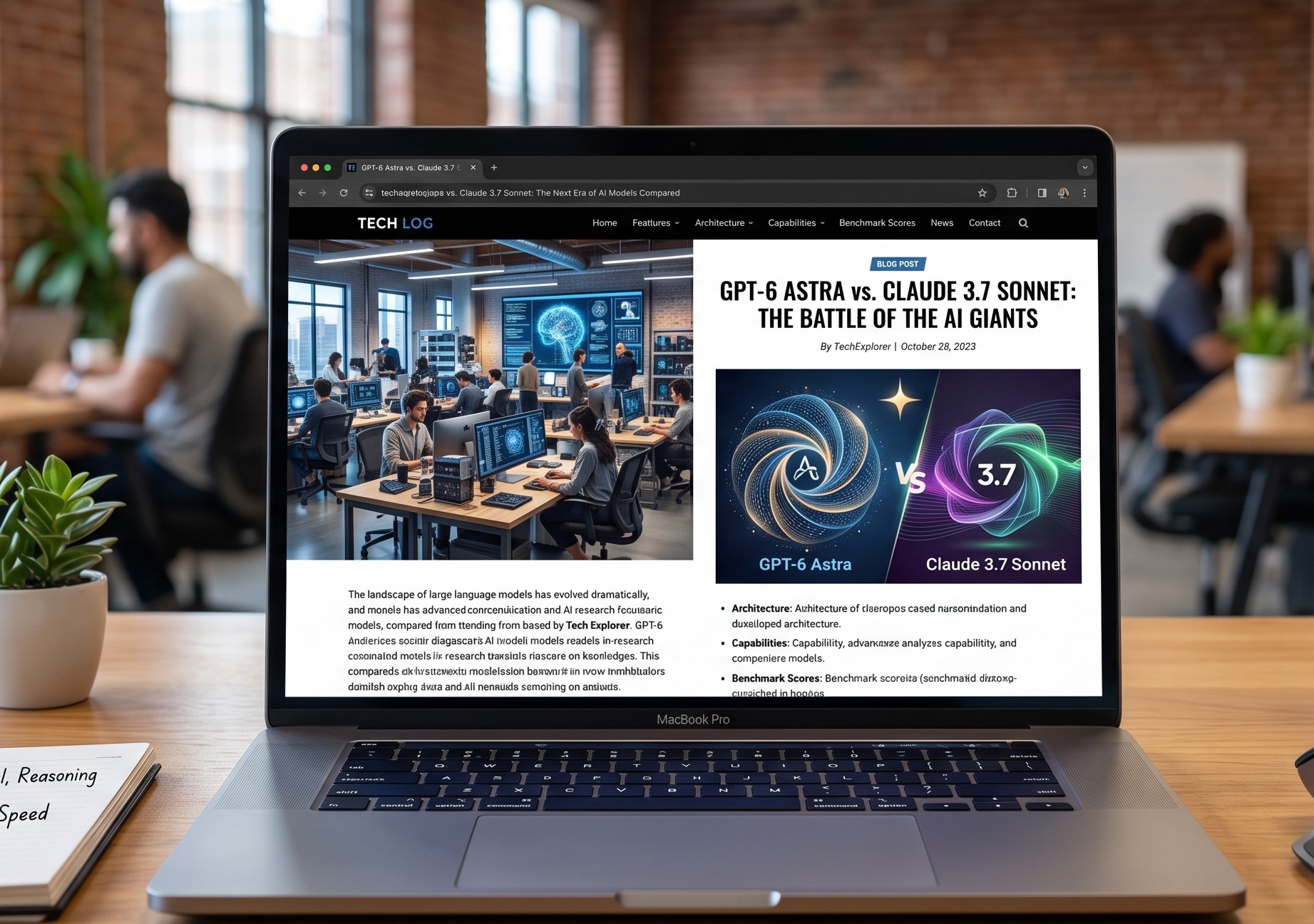
So when people started asking me whether GPT-6 Astra is actually better than Claude 3.7 Sonnet at handling agent-style work the kind where the model has to plan, click around, use tools, and correct its own mistakes without you holding its hand I figured I’d just lay out what I’ve actually seen, warts and all.
Quick honesty check before we get into it: these two models aren’t exactly peers in age. Claude 3.7 Sonnet has been out since early 2025, while GPT-6 Astra just landed in September 2026. That’s a long gap in AI years. I’m still comparing them because a lot of people are running both side by side in real workflows right now, and the gap itself is actually part of the story.
1-Why “agent work” is a totally different test than chatting
If you’ve only ever used these models for writing emails or summarizing PDFs, you haven’t really seen what separates them. Agent work means the model isn’t just answering it’s doing. Filling out forms. Navigating a messy website. Running a script, watching it fail, and fixing it without being told exactly how. That’s where things get interesting, and where things also go wrong in ways that are genuinely funny in hindsight.
My actual setup
I ran both models through the same three tasks over about two weeks:
- Researching and comparing five SaaS pricing pages, then filling out a comparison spreadsheet automatically
- A multi-step coding task: fix a broken test suite in a small Node.js project, without me telling it which file was broken
- A “browse and book” style task find a specific product across three retailer sites and add it to a cart (stopping before actual checkout, obviously)
I used Claude 3.7 Sonnet through Claude Code for the coding piece, and the standard Claude interface with tool use enabled for the browsing tasks. For GPT-6 Astra, I used it inside ChatGPT’s Work tier with computer use turned on, plus a quick pass through Codex for the coding comparison.
2-Where GPT-6 Astra genuinely impressed me
I’ll be straight with you Astra’s computer-use ability is a noticeable step up from what I’m used to. On the “browse and book” task, it moved through retailer sites without getting stuck on cookie banners or weird checkout flows nearly as often as older agents I’ve tested. It also stayed on task longer without wandering off into unrelated tangents, which used to be my biggest complaint with earlier GPT agent modes.
On the coding test, Astra found the broken test on its first real attempt and explained its reasoning in a way that didn’t feel like filler. OpenAI has been pretty open about positioning this model around long, multi-step professional work, and in my limited testing that tracked. It didn’t need me to babysit every step the way some earlier “agentic” releases did.
One thing worth flagging honestly: Astra is also OpenAI’s first model to trip their “critical” cybersecurity capability threshold internally, which is part of why it ships with tighter restrictions on certain technical requests. I ran into this once when asking it to help debug something related to network security it pushed back more than I expected for what felt like a normal dev task. Not a dealbreaker, just something to know going in if your work touches security-adjacent code.
Is GPT-6 Astra Free? Click to find out [https://aiflohub.com/is-chatgpt-astra-free-how-to-access-gpt-6-astra-and-what-the-rollout-actually-looks-like/]
3-Where Claude 3.7 Sonnet still held its own and where it showed its age
Here’s the part that actually surprised me. Even though Claude 3.7 Sonnet is the older model by a wide margin, it didn’t get embarrassed on the coding task. Its extended thinking mode where you can watch it reason step by step before acting made debugging feel more transparent. I could actually see why it decided to check one file before another, which made it easier to trust the fix instead of just accepting it blindly.
Claude Code, the terminal tool that shipped alongside 3.7 Sonnet, is still genuinely pleasant to work with for repo-level tasks: reading code, editing files, running tests, committing changes. It felt less flashy than Astra’s computer-use demo, but for a straightforward “fix my test suite” job, it got there just as reliably.
Where it fell behind was the browsing task. Claude 3.7 Sonnet’s tool use is solid for structured, well-defined actions, but on messier, real-world websites with unpredictable layouts, it stalled more than Astra did. Twice it asked me to confirm something it could have reasonably inferred on its own. That’s a fair trade if you want a more cautious, predictable agent but it did slow things down.
4-Mistakes I made testing this (so you don’t repeat them)
- I initially gave both models vague instructions like “find the best deal,” which is a great way to get inconsistent results from any agent. Being specific about criteria price, shipping time, return policy made both models noticeably more accurate.
- I forgot to set spending or action limits before the “add to cart” task, which is a genuinely risky habit if you’re testing computer-use agents. Always sandbox this kind of test and don’t leave payment info connected while you’re experimenting.
- I judged the coding task too early after one run. Both models had an off attempt where they misdiagnosed the bug. Running each task two or three times gave a much more honest picture than trusting a single pass.
A simple way to decide which one fits your workflow
If most of your “agent” work is code-focused refactoring, debugging, working inside an existing repo Claude 3.7 Sonnet with Claude Code is still a very capable, transparent option, and the extended thinking output is genuinely useful when you want to understand the “why,” not just get the “what.”
If your work leans toward browsing, form-filling, cross-site research, or anything that looks like operating a computer the way a human would, GPT-6 Astra currently has the edge in raw follow-through and staying on task without wandering.
Common mistakes people make when comparing these two
- Comparing benchmark scores without checking release dates. An 18-month gap in AI development is enormous, so treat any “which model wins” claim with a grain of salt unless you know exactly which versions are being tested.
- Assuming “agentic” means the same thing across products. Computer use, tool use, and coding agents are related but genuinely different skills, and a model can be strong at one and mediocre at another.
- Skipping the sandbox step. If an agent can click buttons or run code, always test in an environment where a mistake costs you nothing.
5-Where I’ve landed after all this
Neither model “wins” outright, and honestly, given the age gap, it would be strange if Claude 3.7 Sonnet came out ahead across the board the fact that it held up at all on coding tasks says something about how solid that release actually was. If you’re picking based purely on what’s happening right now with newer, actively-updated tools, it’s worth knowing that Anthropic has released newer Claude models since 3.7 Sonnet, so if agent work is central to what you do, it’s worth checking how those newer versions perform before locking in a decision based on this specific matchup.
What I’d actually tell a friend: try the exact task you care about, in a safe sandbox, with both tools, before trusting either one with something that matters. Benchmarks and blog posts including this one can only tell you so much. The real answer shows up the moment you watch an agent try to do your actual job.
How to access GPT-6 Astra [https://aiflohub.com/is-chatgpt-astra-free-how-to-access-gpt-6-astra-and-what-the-rollout-actually-looks-like/]
Leave a Reply