
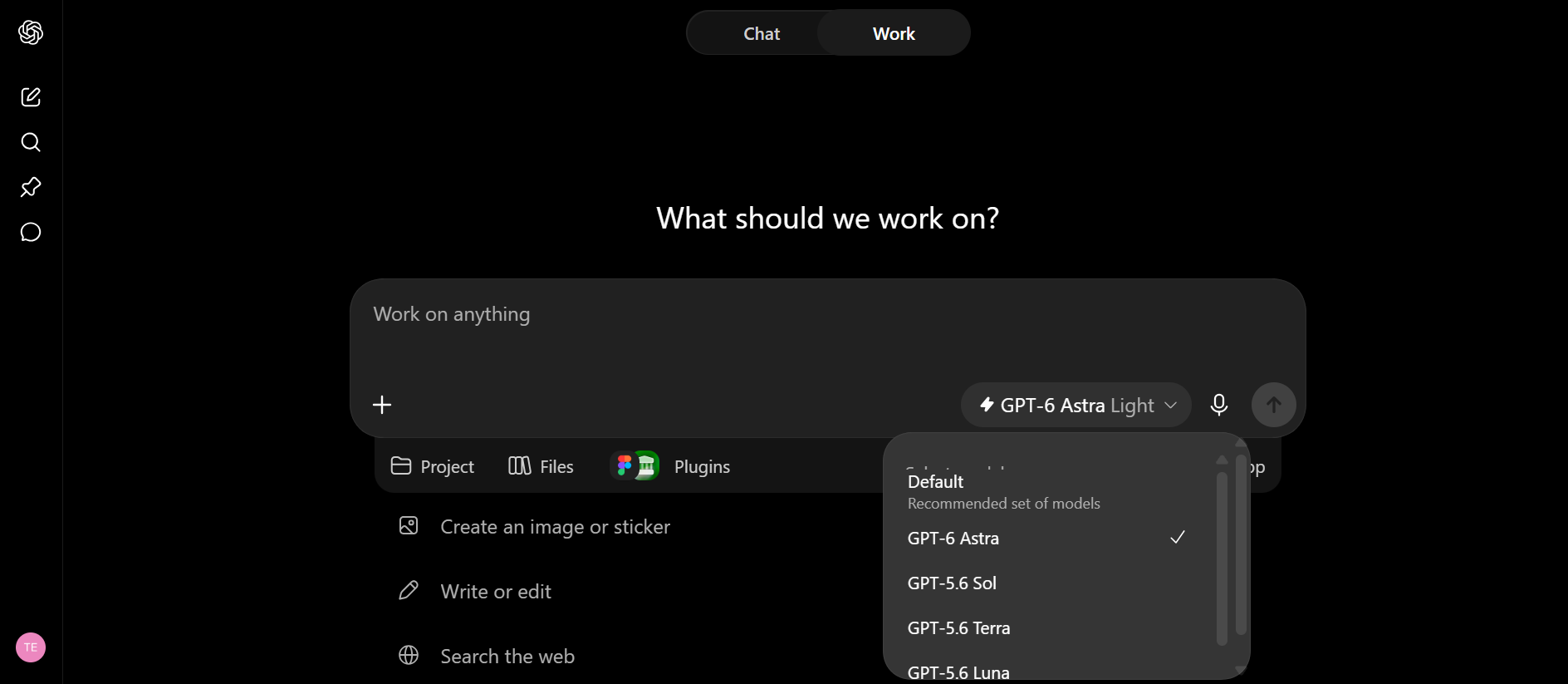
I was mid-coffee on Thursday morning, refreshing my ChatGPT app for no real reason, when I noticed a new name sitting in the model picker: GPT-6 Astra. No email, no popup, nothing. It was just… there. I clicked into it, asked it to fix a messy spreadsheet formula I’d been fighting for two days, and it nailed it in one shot without me explaining the columns twice like I usually have to.
Then I told a friend about it. He opened his ChatGPT app, same Plus subscription as mine, same phone, basically the same setup and Astra wasn’t there for him. Nothing. Just the old model list.
That mismatch is basically the whole story of this rollout, so let’s get into it properly and it’s not the first time an AI tool has changed shape overnight without warning. I ran into the same kind of surprise when my B-roll pipeline shifted under me, which I wrote about in Sora 2 vs VEO 3.1: Which AI Video Generator Actually Wins for Faceless Channels.
Okay, But Is It Actually Free?
Short answer: no, not right now.
GPT-6 Astra launched on September 3, 2026, and OpenAI has been pretty clear that it’s going out to paying accounts first Plus, Pro, Business, and Enterprise. If you’re on the free version of ChatGPT, there’s no mention of Astra coming your way, at least not yet. I went digging through OpenAI’s own announcement page and the model documentation, and free-tier access simply isn’t part of the plan they’ve published. Not “coming soon,” not “in testing” just absent from the conversation entirely.
I want to be straight with you here because I’ve already seen a few blog posts and YouTube titles screaming “GPT-6 Astra FREE ACCESS TRICK!!” don’t waste your time on those. There’s no workaround, no hidden toggle, no magic prompt that unlocks it on a free account. If a page tells you otherwise, it’s guessing, and probably trying to get you to click something.
What I Actually Saw When I Got Access
Once Astra showed up on my account (about two days after my friend got his), the first thing I noticed wasn’t raw intelligence it was how it handled ambiguity.
I gave it a vague brief: “build me a simple landing page for a dog walking business.” With the previous model, it would just barrel ahead and build something generic. Astra paused and asked one focused question whether I wanted a booking form or just a contact page then built it. Took maybe two extra seconds, but the result actually matched what I wanted instead of me redoing it.
I also tested it inside Codex for a small coding task, and it kept track of context way better across a multi-step conversation, similar to the tool-stacking approach I used when I automated customer reply workflows last month. I changed my mind halfway through a task, and instead of treating my new instruction like a whole new request (which older models tend to do, in my experience), it folded the change in and kept working on the parts that weren’t affected.
Was it perfect? No. On a couple of tasks that touched anything security-related, it flat out refused and asked me to clarify intent, which was mildly annoying mid-project but honestly makes sense given how capable this model reportedly is in areas like code and cybersecurity work.
So How Do You Actually Get Access?
Here’s the process I’d walk a friend through, step by step.
Step 1: Check your plan first. Open ChatGPT, tap your profile icon, and confirm whether you’re on Free, Plus, Pro, Business, or Enterprise. This matters more than anything else if you’re on Free, you can stop here for now.
Step 2: Open a new chat and look at the model selector. Astra doesn’t sit inside your old chats automatically. Start a fresh conversation and tap the model dropdown at the top.
Step 3: Look for “GPT-6 Astra” in the list. If it’s there, tap it and you’re in. If it’s not there, don’t panic that’s normal, not a bug.
Step 4: If you don’t see it, just wait a day or two. OpenAI’s own language for this rollout has been “over the coming days,” which in plain English means it’s going out in batches, not all at once. Region, account age, and even which server cluster you happen to land on can affect timing.
Step 5: If you’re on Business or Enterprise, check with your admin. This one trips people up. Even if your company is on the right plan, Astra is off by default for Business and Enterprise workspaces. Someone with admin rights has to flip it on for your organization before anyone on the team sees it.
Step 6: Developers, check the API separately. If you’re building something rather than just chatting, the model is available through the API under the model ID gpt-6-astra, plus it’s on Azure and Amazon Bedrock. This is billed completely separately from a ChatGPT subscription paying for Plus does not give you API credits, and having API access doesn’t put the model in your ChatGPT app. Two different accounts, two different bills. I learned this one the hard way after assuming my Plus subscription would just carry over to my API project. It didn’t.
If you’re already juggling multiple AI subscriptions and logins for client work, this is basically the same mess I mapped out in The Modern AI Automation Agency Stack in 2026 worth a look before you add yet another billing line.
Real Mistakes People Are Making Right Now
A few things I’ve watched people (myself included) get wrong this week:
- Assuming the rollout is broken because a friend has it and you don’t. It’s staged, not simultaneous. Two identical subscriptions can be days apart.
- Downgrading or upgrading their plan just to “force” access. There’s no queue-jump. Switching plans won’t speed anything up, and OpenAI hasn’t offered any paid fast-track.
- Confusing ChatGPT access with API access. These are billed and provisioned independently. If Astra shows up in your app but not your API project (or the other way around), that’s expected, not an error.
- Trusting “free trial” claims found on random sites. As of now, there’s no confirmed free trial or credit program for regular users. If one shows up later, it’ll be announced by OpenAI directly, not by a blog with a countdown timer.
- Panicking over a refusal. Because Astra reportedly has stronger capabilities in sensitive areas like cybersecurity, it’s more cautious about certain requests than older models were. That’s a safety behavior, not a broken account.
What About Cost If You’re Not on Plus?
If a Plus subscription feels like overkill for what you need, the API route can actually work out cheaper if your usage is light you’re billed per token instead of a flat monthly fee. Pricing sits around $10 per million input tokens and $50 per million output tokens for standard text use, which sounds abstract until you realize a handful of coding or writing sessions a month might cost you less than a full subscription. It’s not the right call for everyone, but if you’re mostly experimenting or running occasional tasks, it’s worth doing the math before defaulting to Plus.
This is the same “subscribe vs. pay-as-you-go” math I ran into with voice tools too I broke down the free and cheap options in 5 Free ElevenLabs Alternatives in 2026 if you’re weighing similar tradeoffs elsewhere in your stack.
Where This Leaves Us
If you’re sitting on the free plan hoping to stumble into Astra, I wouldn’t hold my breath nothing in OpenAI’s own rollout notes points that direction right now. If you’re already paying for Plus, Pro, Business, or Enterprise, the honest advice is just to check your model picker every day or two rather than assuming something’s wrong.
And if you do get in, don’t expect it to feel like a completely different app overnight. The differences show up more in the small moments fewer wasted back-and-forths, better memory of what you actually asked for, and it asking you the right question at the right time instead of guessing wrong and making you start over.
That, more than any benchmark number, is what actually changed how I use it day to day.
Related reading:
Leave a Reply